Living in America 8
◆Satonobou's Life in America, Part 8
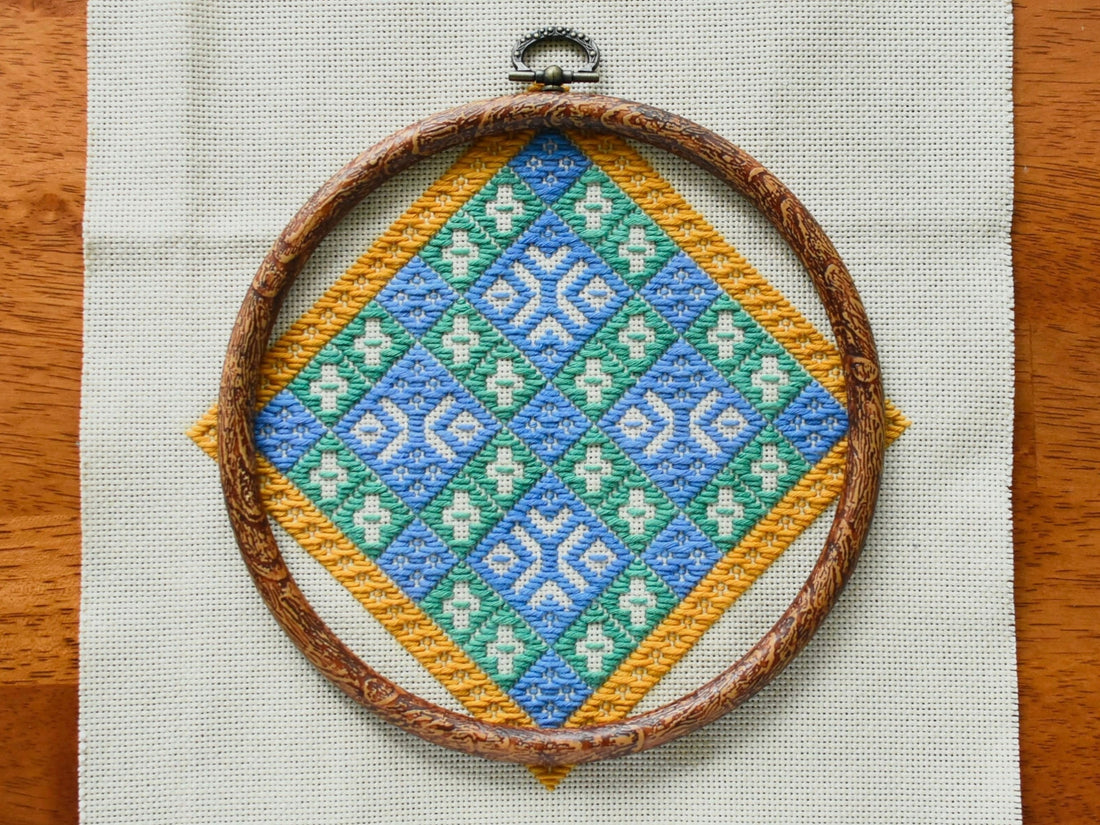
It’s been two months since my last post about life here in the US. Have you been enjoying your kogin time? I took communication classes at Bellevue College during the fall and winter quarters, but I decided to take a break this quarter. My days had started to feel a little too much the same, but more than anything, I wanted to spend more time on our kogin circle. I also wanted time to develop kits for my upcoming visit to Japan and make pieces for Japan Fair in Bellevue this July.
Another big reason was that my children’s Little League baseball season was starting. I wanted to leave a little more room in both my schedule and my mind. Haha! My English progress may slow down, but I expect to be living in the US for a while, so I’ll keep learning at my own pace.
For about two weeks after classes ended in late March, I mostly rested, enjoying my own break and my children’s spring break. After that, I finally organized the materials I’d been meaning to sort through for ages. I started trying new colors for my kits and working on a larger kogin piece. Little by little, I was able to do the things I’d wanted to do, and my days became more enjoyable.
At the same time, I had noticed that I wasn’t getting nearly as much exercise since I’d started driving my children to and from school in January. I was beginning to feel less fit and a little less emotionally steady, so I took up jogging at the end of March.
I’ve started enjoying it so much that I signed up for the 10K at next month’s Seattle Marathon! It’s a little further than feels comfortable at my current level, but I think I can get there with some effort. Having a goal gives my running a sense

◆3 months since the club started!
Somehow, it’s already been three months since we started the circle! More than ten new members have joined over the past two months, bringing us to nearly 90 members. About 60 of you have already introduced yourselves.
I know there may be various reasons why some members haven’t had a chance yet. But because we’re meeting online, where we can’t see one another face to face, introductions help us get to know each other and feel more comfortable connecting. If you haven’t introduced yourself yet, please do!
Thank you for helping make our circle a safe and welcoming place.
What has made me especially happy lately is seeing more members take the initiative and help bring the circle to life. More people are sharing collaborative posts and Instagram Stories. Some respond to other members’ questions with photos, while others share what they’re trying, even when things aren’t going quite as planned.
“I made a mistake, so I’m starting over.” “I made a mistake, but I’ll keep going and see what happens.” I think these honest glimpses into the process help other members feel reassured and encouraged.
Instagram is often a place where we share what we want others to see, looking its best. Seeing only those polished posts can sometimes feel intimidating. Sharing mistakes and things we’re struggling with can help someone relax and think, “Maybe I’ll just give it a try!” Let’s each share whatever feels comfortable and enjoy ourselves.
And please keep sharing news about events where you’ll be exhibiting or selling your work! Some members would love to connect in person, too. Please take care when arranging to meet, and enjoy getting to know one another.
◆ What’s Next for Satonobou?
I’m planning to sell kits and finished pieces during my visit to Japan, which begins in late July. Here in the US, I’ll be taking part in Japan Fair in Bellevue again this year, sharing kogin with the local community.
Over the next year, I’m also thinking about creating pieces to submit to art exhibitions here in the US. Crafting is such a popular leisure activity here, and I wonder if this might be a way to enjoy myself while also contributing to kogin and the local community. I haven’t even researched what exhibitions are out there yet, but I’m already excited about buying plenty of fabric and thread when I’m in Japan.
◆ Finally, What Does “Enjoying Kogin Without a Chart” Mean?
I’m only now realizing how open to interpretation the phrase “enjoying kogin without a chart” can be. I’m very happy that some people have understood it in the way I intended, but I’ve also realized that many still have questions. I put together the checklist below in the hope that it might offer a little guidance. It won’t apply to everyone, but take a look. It might help—and I’m sorry if it doesn’t!
① You haven’t yet learned modoko, the basic motifs of kogin, by heart.
Enjoy stitching the basic motifs while following their charts! As you stitch, pay attention to where your needle is within the motif. Little by little, the chart will start to look like more than just a collection of lines.
② You know individual modoko by heart, but you can’t yet repeat one motif without looking at a chart and thinking through how it connects.
Enjoy working from a chart of a repeating pattern! You’ll begin to see how the stitches flow and how the pattern fits together. Keep track of where your needle is. Try to see each modoko as a whole, and notice which motif you’re working on and where you are within it. At first, coloring the individual motifs on your chart can help you learn to recognize them. This may change the way you see the chart.
③ You can repeat one modoko without looking at a chart, working out the pattern in your head.
I think you’re ready to try stitching without a chart! Picture a rough design in your mind, or sketch it on paper, and give it a go. You could practice the flow of a pattern by connecting repeats of one modoko diagonally, making small changes as needed. Trying several different modoko, both large and small, side by side can also be a useful experience.
④ You can stitch a pattern combining several modoko without looking at a chart, working it out in your head.
You can stitch without a chart! When you feel ready, go for it! If you reach a point where you need to adjust things to make the pattern fit, try thinking, “A new motif is being born!” and keep going.
The key to “enjoying kogin without a chart” is actively thinking as you stitch. It means not preparing a chart for the entire design and enjoying the process of figuring things out as you go. Keeping resources such as koginbank’s Modoko Database or a book of basic motifs beside you, and referring to them as you decide how to combine motifs, can support that enjoyment.
It can also help to use pattern books or kits to stitch designs made up of different combinations of motifs. For me, trying to recreate a traditional Higashi Kogin piece opened up a much wider world of kogin. It helped me enjoy a more spontaneous approach: just start stitching and see where it takes me.
If you’re thinking, “Wait… what is Satonobou talking about? I still don’t understand!” I’ll try to explain it with drawings, if I can. Fingers crossed I can make it work!
▶️Materials Research Blog
▶️Instagram (We share the simplicity and fun of Kogin embroidery through videos, etc.)
Satonobou